Will A Down Coat Make You Look Bulky? Here's Our Edit Of The Seamless Ones That Don't
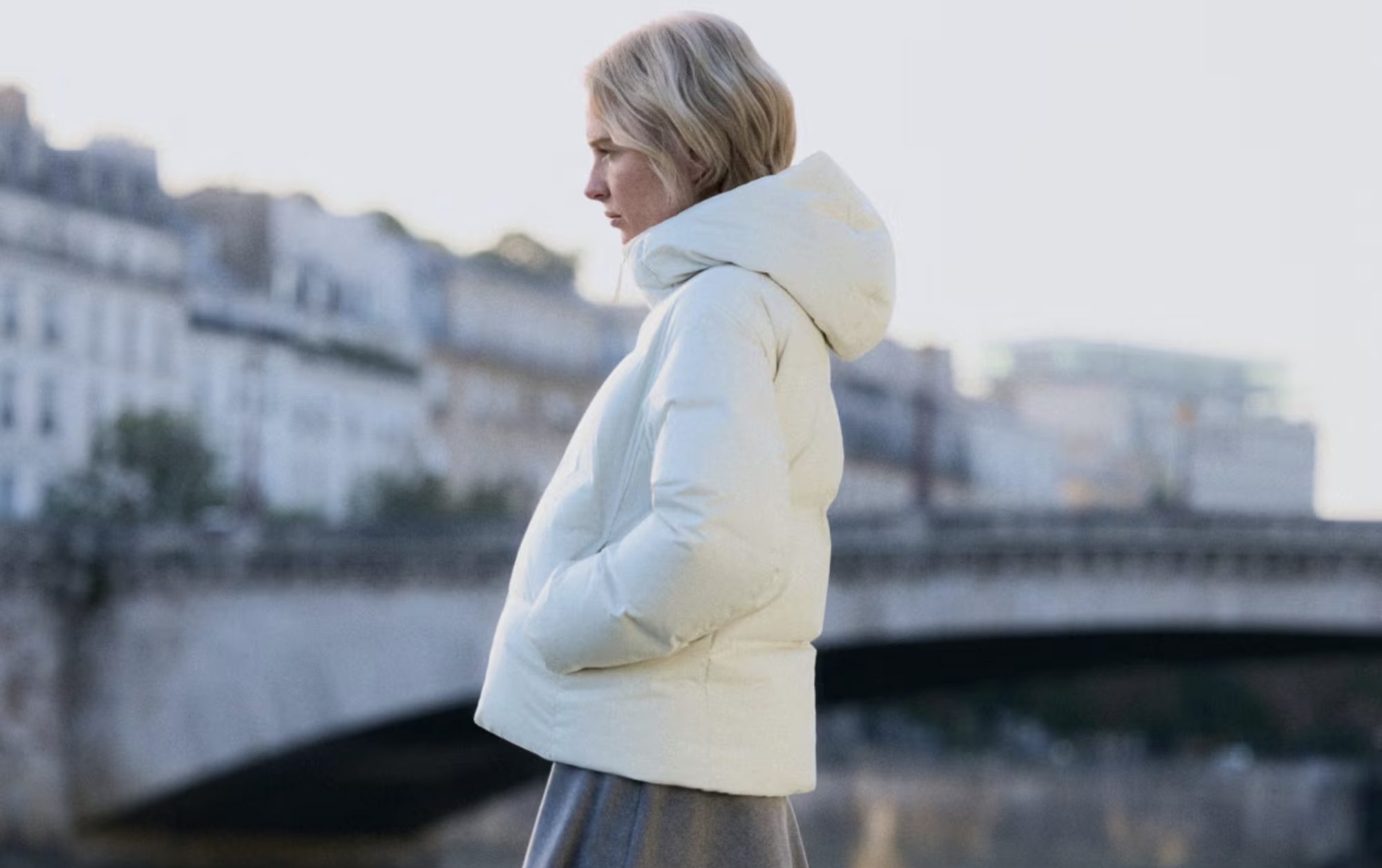
A warm coat does not have to turn you into a walking duvet. The trick is choosing a smoother construction, the right length and less bulk in the wrong places. Here's how.
Catching yourself in a shop window ten minutes after leaving the house can be enough to ruin a perfectly good winter coat. You chose it because you were cold; the reflection suggests it has added several inches everywhere. The coat may be doing an excellent job thermally. Visually, it has become the outfit.
A down coat does not have to make you look bulky. The least bulky-looking versions are seamless or non-quilted, with a clean surface, a hem that clears the fullest part of the hip and enough shape to stop the coat becoming one straight padded column. That distinction matters more in your fifties and sixties than any rule about whether you are “too old” for a puffer. Look for matte black, chocolate, olive, navy or camel, then wear it as you would any other city coat: over a fine knit, with straight or wide trousers and a flat boot or loafer. Indoors, undo it and let the outfit underneath reappear.
The useful differences are in the surface, length and fill. Get those three right and a puffer stops feeling like a compromise. Here's how to nail a cosy look every time, without turning every day into a duvet day.
Start With A Seamless Coat
Traditional puffers use stitched channels to hold the insulation in place, creating the familiar horizontal grid. Seamless or non-quilted construction removes much of that visible segmentation, so the eye reads one cleaner surface rather than a stack of padded bands.
The Uniqlo Seamless Down Parka is the clearest place to start because it combines all that smooth construction you crave with a cosy, wind-resistant high neck and a simple, city-friendly shape. If your main objection to puffers has always been the Michelin-man effect, reducing the visible quilting is the first thing worth trying so you can enjoy the comfort without the bulk.
Down has an excellent warmth-to-weight ratio and compresses very well, but the important number you need to know is fill power and the amount of insulation used, not simply whether the label says 90% down and 10% feather. A 90/10 ratio tells you what the filling is made from; it does not, by itself, tell you exactly how warm the coat will be - so be mindful!
Length Matters More Than You Think
A puffer becomes hardest to wear when its hem stops at the widest part of your hip. A cleaner long coat that travels past that point is usually easier, particularly with straight or wide trousers, because it creates one uninterrupted outer line.
Around the knee is the useful middle ground for most women: enough length to feel properly warm without the coat swallowing everything underneath. The Uniqlo Seamless Down Long Coat is our pick if you want warmth without a heavily quilted surface; the M&S Goodmove Stormwear Cocoon Longline Padded Jacket gives you a synthetic, shower-resistant alternative.
With Wide Trousers, Keep The Coat Shorter
Wide and barrel-leg trousers already carry volume low down, so piling a bulky coat over the top can make the whole outfit feel wider than either piece does alone. A short coat works best when its hem reaches the hip bone rather than gripping the waist, with a funnel neck doing some of the work you might otherwise ask of a scarf.
The Uniqlo Non-Quilted Down Short Coat is particularly good for this because the smooth surface keeps the top half quiet and its adjustable hem lets you choose an A-line or cocoon silhouette. It is a much more convincing partner to a wide trouser than a shiny cropped puffer with a tight elasticated waistband.
The Barbour International Brantley Puffer Jacket is the synthetic alternative here. It is polyester-filled rather than down and, at 63.5cm, is not a sharply cropped jacket, but it still gives you the shorter proportion this outfit needs.
A Packable Jacket Is A Layer, Not Your Only Coat
Packable padded jackets solve a different kind of problem. They are useful on milder winter days, for travel, or underneath a roomier coat when the temperature drops, but their strength is their lightness rather than depths-of-winter protection.
The Uniqlo PUFFERTECH Jacket is the useful version to know because synthetic insulation stays light, dries quickly and packs down easily. Wear it over a fine knit when you are moving around, then treat it as an insulating layer rather than expecting it to replace a substantial coat through the coldest part of winter.
A Gilet Works Until You Stop Moving
A gilet can be brilliant over a knit for the school run, dog walk or a quick trip into town because it warms your core without adding another full sleeve. It is not a substitute for a coat once the day is properly cold, windy or involves standing still.
The M&S Padded Feather and Down Gilet is our pick because the light fill, cosy funnel neckline and packable construction make it genuinely useful rather than merely decorative. Keep one for active, in-and-out days. When you know you will be outside for any length of time, take the coat.