Slipping Through My Fingers – Part II
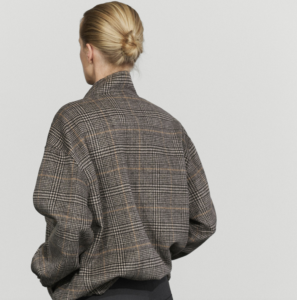
She changed
Not overnight, but piece by piece
After every overlooked word
Every dismissed feeling, Every ignored plea.
She became quieter
Less available, Less emotional
Not because she stopped loving, but because she finally started listening to herself.
With every passing year, I am reminded just what an amazing human being my daughter has become. The transition did not arrive in a single moment. It unfolded slowly, almost imperceptibly, as she became more fully herself. Less my little girl and more the woman she was always destined to be. It makes me wonder: was it nature, nurture, or something more mysterious altogether?
Perhaps our daughters are not clones of ourselves, but reflections, shaped by both inheritance and experience, by what we give them and by what life teaches them beyond us.
For that, I can take only some measure of credit for the beautiful, self-assured young woman who stands before me today.

There is something profoundly emotional about watching a daughter grow into herself. So often she becomes a mirror to our own younger lives, to the girl we once were, and perhaps to the woman we might have been. In that vibrancy and youthfulness, it is hard not to see our lost opportunities, our abandoned dreams, perhaps the roads we did not take.
Her freedom can stir in us a fierce instinct to guide, protect, and sometimes redirect her away from the mistakes we once made. Passions and desires no longer deemed possible are replaced with reflection on what we might have done differently, presenting an urge to foster the best for our daughters. However difficult it may be, love sometimes requires stepping back. She must live her own life, make her own mistakes and discover, in her own way, who she is.
As mothers, many of us know what it is to sacrifice.
Whether we stayed at home or built careers alongside raising a family, motherhood has often meant setting aside parts of ourselves; our ambitions, desires, even identity, in service of those we love.
Sometimes those choices were made gladly. Sometimes they were necessary. And sometimes, years later, those sacrifices can return in quieter forms: tiredness, or a sense that our own needs have slipped down the line. It’s not a surprise to find ourselves in an emotionally complex relationship with our daughter.
Forging her way into adulthood, I can’t blame her for often seeing the world through a lens of possibility, whilst not perhaps understanding the weight of the choices made on her behalf. Equally, we can be struggling to separate our own history from the life our daughter is now creating.
Without meaning to, both women can begin to miss one another. Not from lack of love, but from looking at the same moment through different eyes.
Our generations were raised on different terms. For my mother, commitment often meant marriage, security, a home. For my daughter’s generation, commitment is built more on love and choice than necessity. She’s free to raise a family alone without societal prejudice. Free to walk away from what no longer serves her and free to build a life on her own terms. It is worth remembering, when we misunderstand each other, that we are simply working from different maps. Nature and nurture play a considerable part but the influence that society holds over our daughters cannot be underestimated.

Being Heard
We are so often the emotional architects of family life, holding together the invisible threads, whether smoothing conflict, carrying worry, or absorbing the needs of everyone around us. it is easy, in that role, to lose track of our own voice.
Psychotherapist Rosjke Hasseldine writes that “a daughter’s relationship with her mother lays the foundation for her relationship with herself”. I think about that often. What we model, how we honour our own needs, how we let ourselves be heard, how we hold a bounday, becomes part of what ur daughters learn about being a woman.
“A daughter’s relationship with her mother lays the foundation for her relationship with herself.” Rosjke Hasseldine, Psychotherapist.

What I Hope to Give Her
If I want a different, freer life for my daughter and for the daughters who come after her, it starts with what I model now. Not with lectures, but with example. With the boundaries I hold. With the needs I finally allow myself to name. With the version of myself I let her see.
Because the truest gift we can give our daughters isn’t protection from the world, or even our wisdom about it. It’s permission to be heard, to take up space, to be fully, unapologetically themselves. And in watching her claim that so naturally, I find I am learning it too.
“Every female has the right to be heard, valued and respected, and to know that anything else is just not okay”.
Taken from Rosjke Hasseldine The Silent Female Scream Revolution